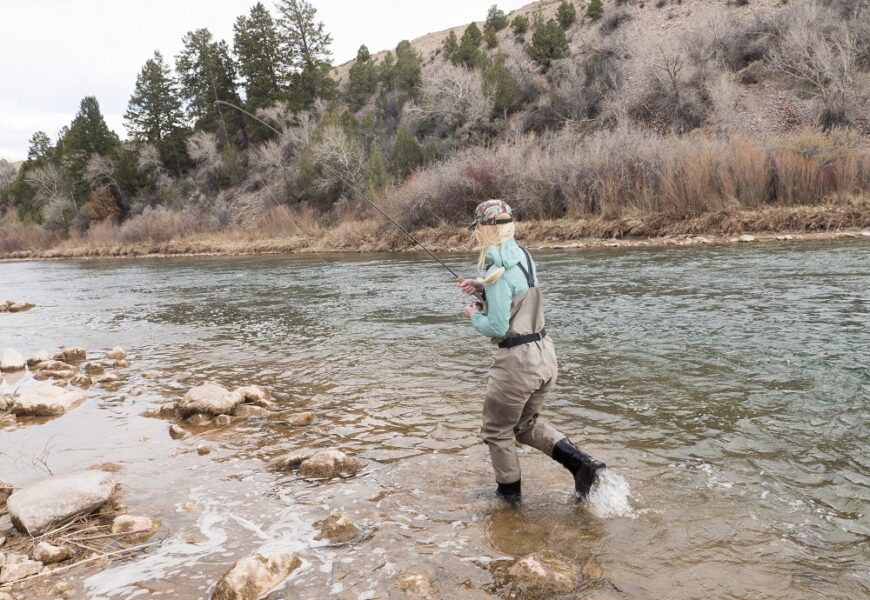
Photos by Ken Proper
Utah’s Green River, below Flaming Gorge Dam in the state’s northeast corner, is one of the most productive tailwater trout fisheries in America — with gin-clear water, big wild rainbows, browns, and cutthroat, and famously dense fish counts. The river splits into three distinct stretches, the A, B, and C sections, each with its own character and access. Here’s how to fish all three.
Green River at a Glance
| Detail | Info |
| Location | Northeast Utah near the Wyoming/Colorado borders; base town of Dutch John |
| River type | Tailwater below Flaming Gorge Dam; cold, clear, year-round |
| Sections | A (7.2 mi), B (9 mi), C (12 mi) — dam downstream to Browns Park |
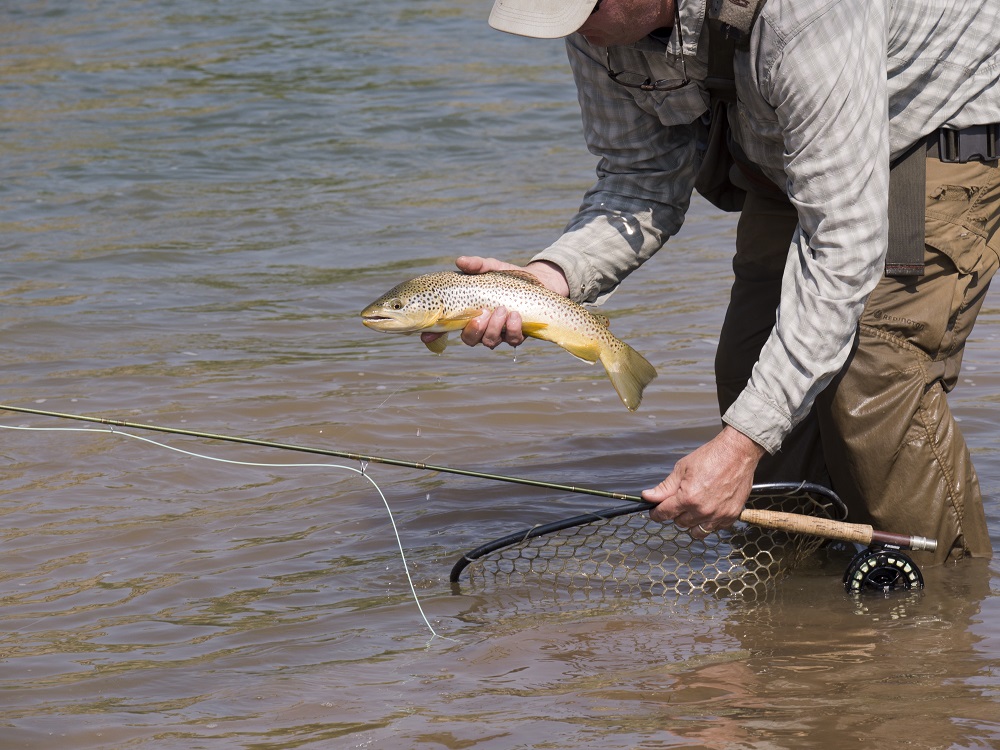
| Target species | Wild rainbow, brown, and cutthroat trout |
| Trout density (A section) | Among the highest in the U.S. — many thousands of trout per mile |
| Best months | April–May and October–November (peak); productive year-round |
| Water temp | Steady ~52–54°F releases from the dam |
| Gear | 4–6 wt rods, floating lines, 5X–6X tippet |
Where Is the Green River in Utah?
The fishable water starts directly below Flaming Gorge Dam near Dutch John, Utah, and runs south and east toward the Colorado line through Red Canyon and Browns Park. Cold, oxygen-rich water released from deep in the reservoir keeps temperatures ideal for trout all year, which is why the fishery is so consistent.
The Three Sections of the Green River
Most trip planning comes down to choosing a section. This is the fastest way to see the differences:
| Section | Length & run | Character | Access |
| A | 7.2 mi (Dam → Little Hole) | The famous one — highest fish density, clear water, sight-fishing | Wade via the riverside trail; float; easiest access |
| B | 9 mi (Little Hole → Indian Crossing) | Bigger water, more solitude, strong scud fishery | Float-focused; 17 streamside campsites (reservations required) |
| C | 12 mi (Indian Crossing → Browns Park) | Remote and scenic; Red Creek Rapid, Heaven’s Gate | Float + some wade; primitive access |
A Section — Flaming Gorge Dam to Little Hole
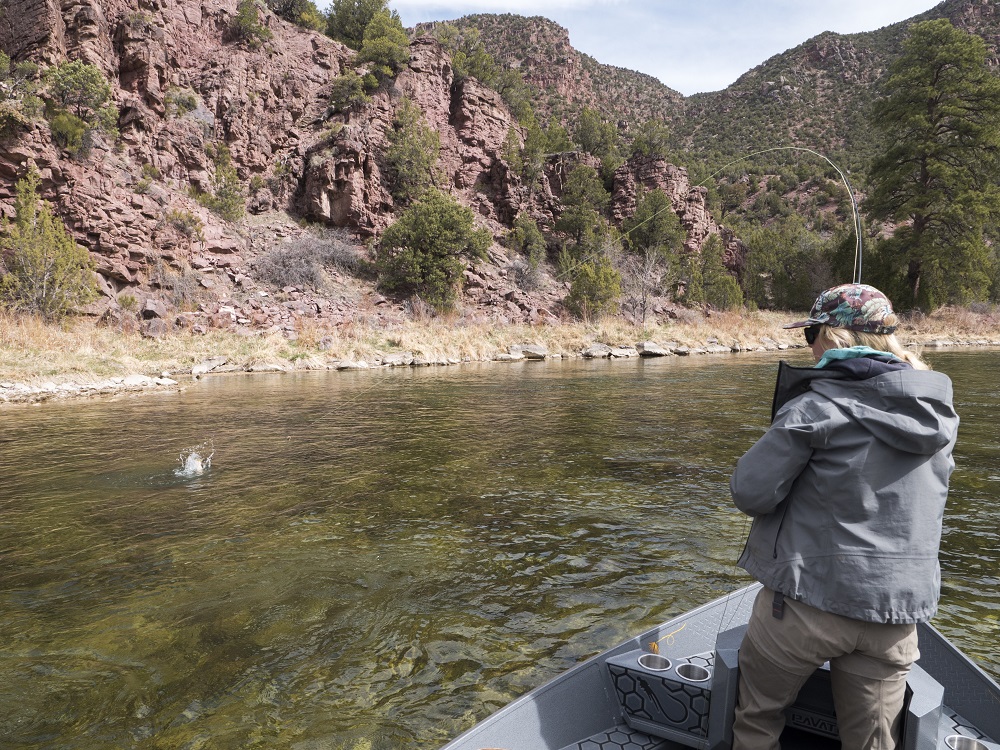
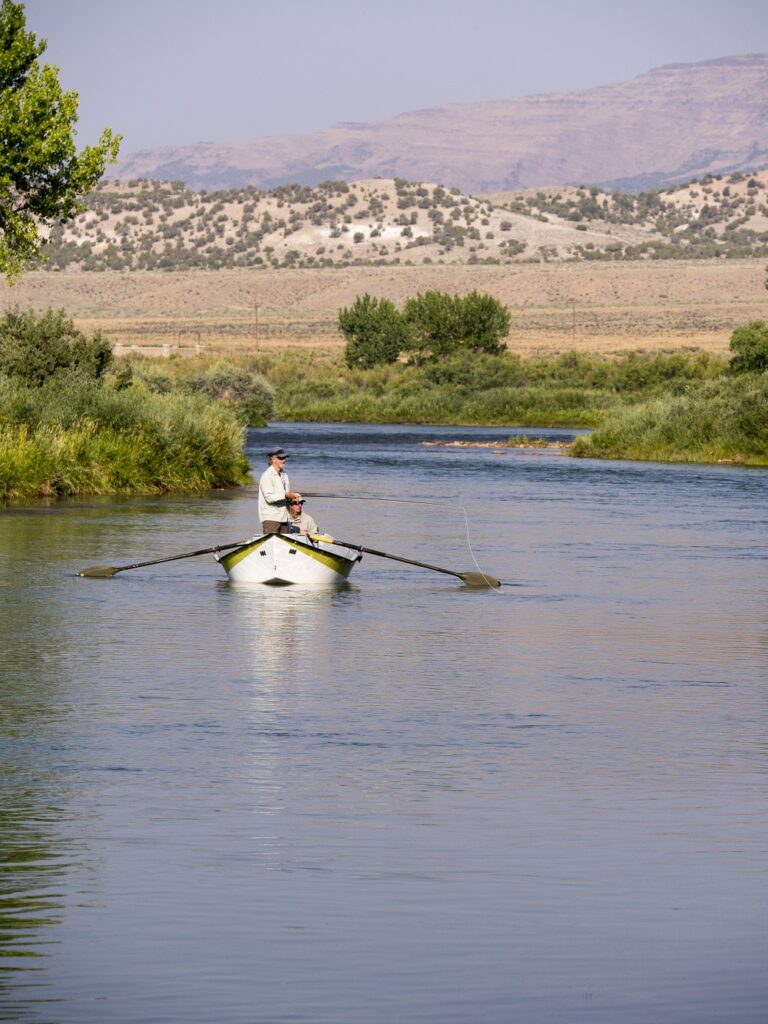
The 7.2-mile A section is the Green River’s calling card and one of the most famous tailwaters in the world. A packed dirt and gravel trail follows the river the whole way, so wade anglers can walk to sight-fishing water over clear cobble. Blue-winged olive hatches can be excellent, especially in overcast weather, and the fish are notoriously well-educated.
B Section — Little Hole to Indian Crossing
The 9-mile B section trades crowds for space and bigger water. It’s prime scud country — those shrimp-like crustaceans are a staple of the trout’s diet, flushed into the current on high nighttime dam releases (which can approach 4,200 cfs). There are 17 streamside campsites along this reach for anglers who want to fish it over a couple of days; reservations are required.
C Section — Indian Crossing to Browns Park
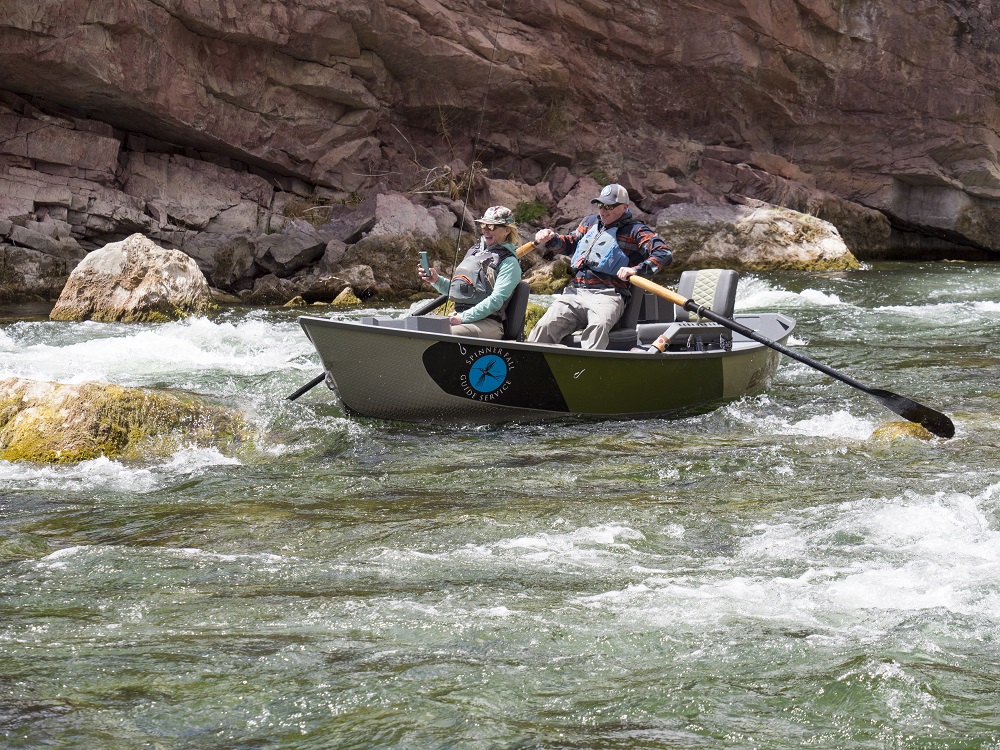
The remote 12-mile C section is the wildest of the three, winding past landmarks like Red Creek Rapid, Heaven’s Gate, and the Tree Tops. It offers scenic float trips and wade access, with a real backcountry feel and excellent wildlife viewing — black bears, bighorn sheep, mule deer, and bald eagles are all possible.
When to Fish the Green River
Because it’s a tailwater, the Green fishes all year, but two windows stand out.
| Season | What to expect |
| Spring (Apr–May) | Peak. Blue-winged olives, strong midge activity, active fish as water warms through the day. |
| Summer | Terrestrial season — crickets, hoppers, ants, and beetles along the banks; early/late fishing in heat. |
| Fall (Oct–Nov) | Second peak. BWOs return; brown trout become aggressive pre-spawn. |
| Winter | Midge fishing on milder days; low crowds, technical dry and nymph work. |
Best Flies for the Green River
| Category | Patterns |
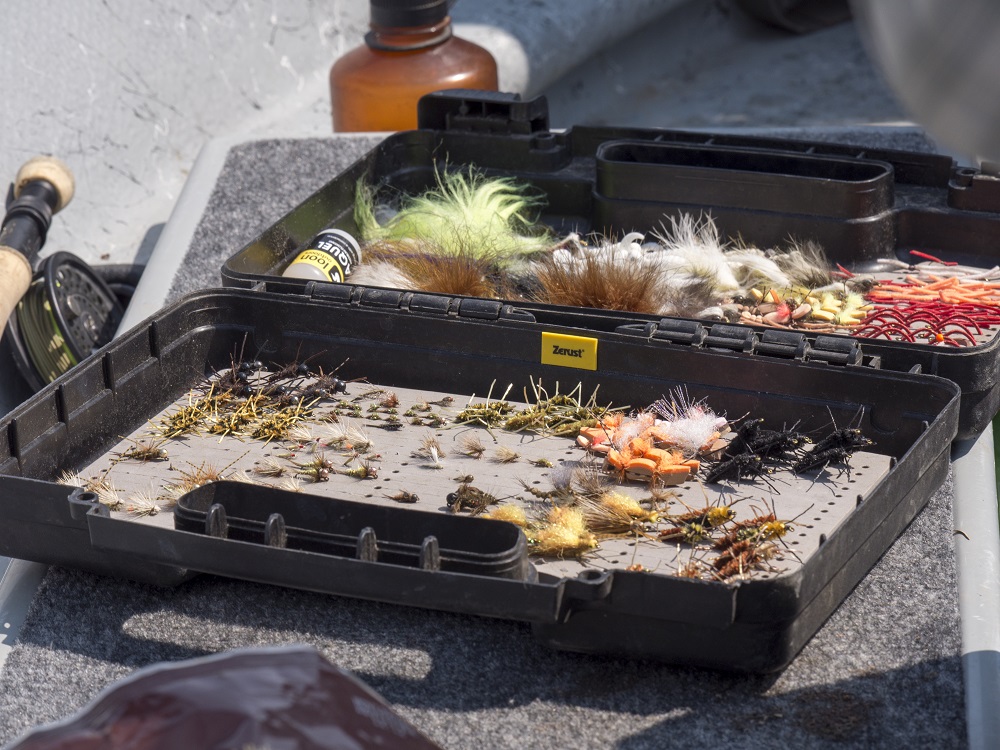
| Mayflies | Blue-Winged Olive patterns, Parachute Adams, Pale Morning Duns, Pablo’s Cripple |
| Midges | Parachute Black Midge, midge emergers (black, red, chartreuse) |
| Scuds / worms | Scud patterns (olive, orange), Red San Juan Worm |
| Nymphs | Frenchie (red, chartreuse) |
| Terrestrials (summer) | Crickets, hoppers, ants, beetles |
Gear & Tackle
- Rods: 4- to 6-weight — a 5-weight is the do-everything choice.
- Lines: floating.
- Tippet: 5X and 6X — the water is clear and the fish are picky.
- Bring: polarized sunglasses (essential for sight-fishing), sunscreen, and a waterproof jacket.
Access, Camping & Shuttles
| Section | Camping / access |
| A | Dripping Springs Campground (reserve via recreation.gov); riverside trail for wade access. |
| B | Little Hole area; Oct–Apr register at the launch site, May–Sep reserve via recreation.gov. |
| C | Indian Crossing and Bridge Hollow (BLM); primitive sites are first-come, first-served. |
| WRITER NOTE — Verify the current reservation URLs/agencies (recreation.gov vs. BLM) before publishing — these get reorganized. A dead booking link is a bad user-experience signal. |
Guides, Fly Shops & Lodging
Guide services & fly shops
- Spinner Fall Guide Service
- Old Moe Guide Service
- Trout Bum 2
- Trout Creek Flies (fly shop)
- Western Rivers Flyfisher (fly shop)
Lodging (Dutch John area)
- Flaming Gorge Resort
- Red Canyon Lodge
- Dutch John Resort
Licenses & Regulations
A Utah fishing license is required. Non-residents can buy short-term or annual licenses through the Utah Division of Wildlife Resources, and special-regulation (artificial-fly/lure, reduced-limit) rules apply on much of the Green — always check the current guidebook before you fish.
Frequently Asked Questions
What’s the best section of the Green River to fly fish?
The A section (Dam to Little Hole) is the most famous, with the highest fish density and easy wade access via a riverside trail. The B and C sections offer bigger water, more solitude, and float trips.
When is the best time to fish the Green River in Utah?
April–May and October–November are the two peak windows, but because it’s a tailwater the Green fishes well all year, with midges in winter and terrestrials in summer.
What flies work best on the Green River?
Blue-Winged Olives , midges (including emergers), scuds, San Juan worms, Frenchies, Parachute Adams, and summer terrestrials like hoppers and ants. Bring small sizes and light tippet.
Do I need a guide to fish the Green River?
No, the A section is very wadeable on your own, but a guide (and a drift boat) is the best way to fish the bigger, more remote B and C sections and to decode the technical dry-fly game.
Where do I stay when fishing the Green River?
Dutch John, Utah is the base town, with options like Flaming Gorge Resort, Red Canyon Lodge, and Dutch John Resort, plus riverside and BLM campgrounds along all three sections.
What tackle do I need for the Green River?
A 4- to 6-weight rod with a floating line and 5X–6X tippet covers nearly everything. Polarized sunglasses are essential for sight-fishing the clear water.
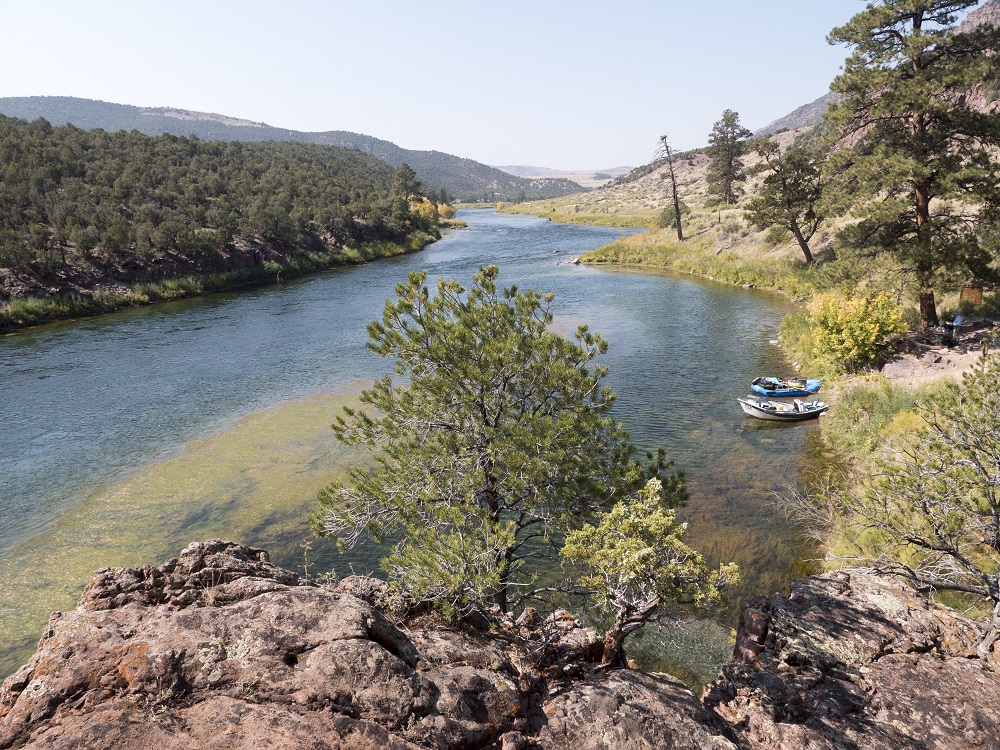
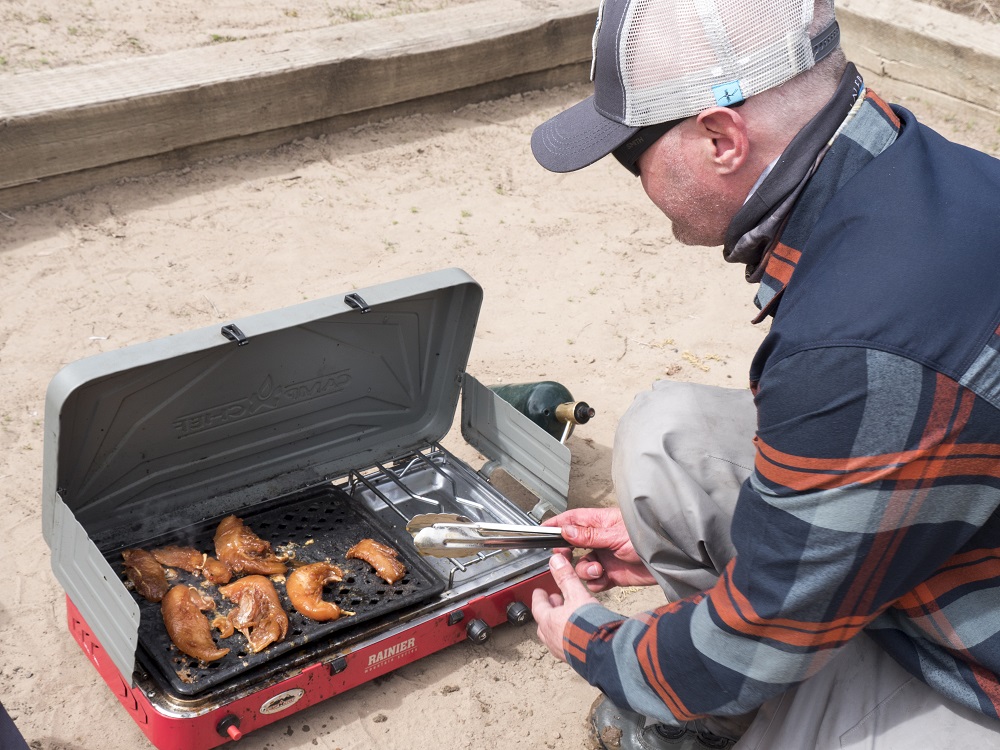
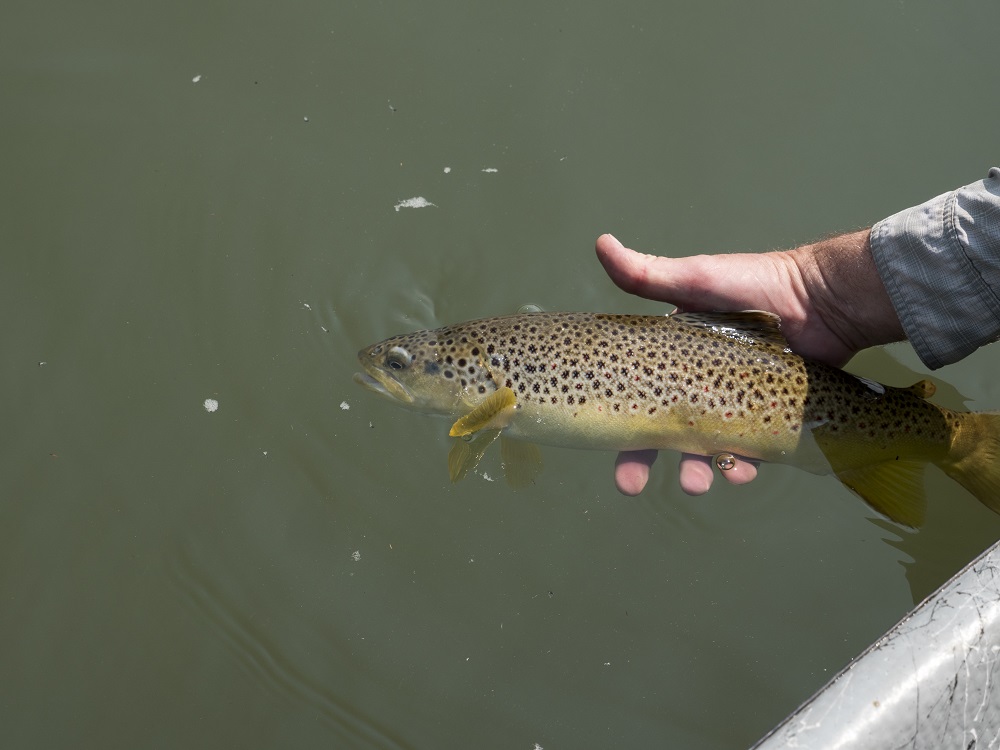
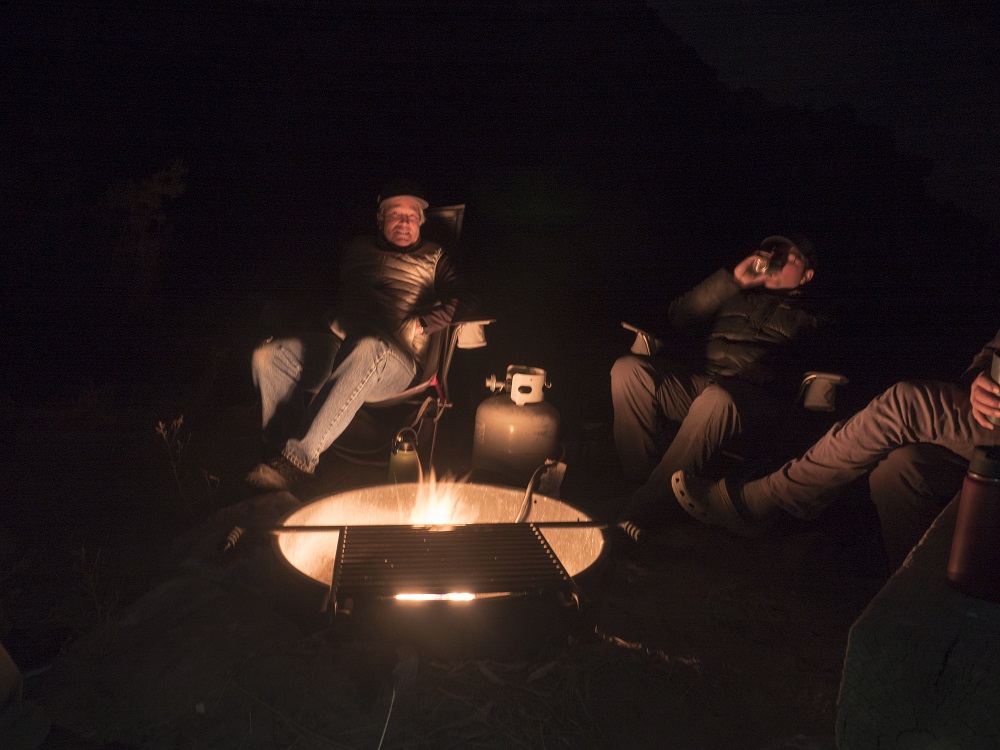
Photography: A Glimpse of the Green River

Featured Pattern: Pablo’s Cripple (by Paul Russell)
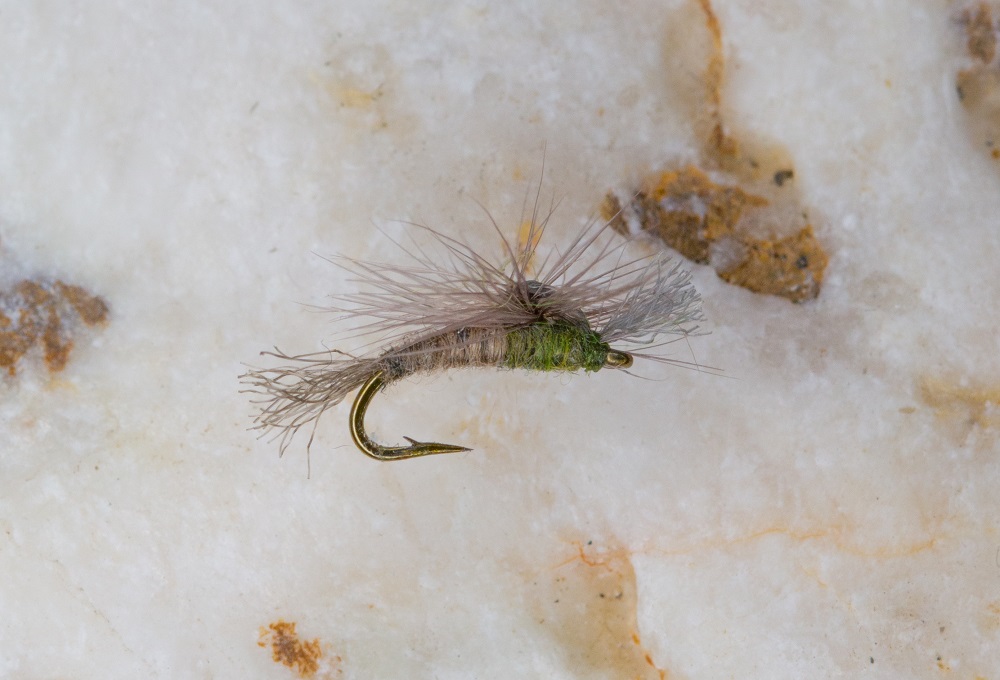
TMC 200R size 20; olive 8/0 thread; brown Z-Lon shuck; olive superfine abdomen; Adams-gray superfine thorax; dark-gray Para Post wing with dark dun hackle.
Longtime American Fly Fishing contributor Ken Proper is a career commercial photographer, freelance writer, and author who lives in Steamboat Springs, Colorado. His latest book is the historical novel Victims of Love, available at www.kenproperbooks.com.