Few experiences in American angling rival the moment when a wild trout rises through clear, cold water to take a dry fly off the surface in the shadow of the Rockies. From Montana’s freestone giants to Colorado’s high-country headwaters and Idaho’s cutthroat strongholds, Rocky Mountain dry fly fishing is the gold standard against which most North American trout fisheries are measured. This guide breaks down the seasons, the hatches, the rivers and the gear you need to fish dries effectively across the region – whether you’re planning a destination trip or chasing a hatch on home water.
Why the Rocky Mountains Are a Dry Fly Mecca
The Rocky Mountain corridor – running from northern New Mexico and Colorado, Wyoming, Idaho, Montana, and up into western Canada – produces some of the most prolific aquatic insect hatches on the continent. Cold, oxygen-rich tailwaters and freestones, glacial-fed lakes and alpine streams combine to create habitat where native cutthroat trout along with wild rainbow, brown, and brook trout actively look up. Add dramatic scenery, generous public access and a deep guiding culture, and you have a region that rewards both the destination angler and the local who has fished the same run for forty years.
For a deeper dive into specific waters, the magazine’s full Rocky Mountains archive is worth bookmarking.
The Rocky Mountain Hatch Calendar
Successful dry fly fishing in the West is mostly about timing. Here is a season-by-season look at what trout are eating – and when.
Early Season (March-April): Skwalas and Blue-Winged Olives
The first real dry fly action of the year on most Rocky Mountain rivers comes from the Skwala stonefly, a medium-sized, olive-bodied bug that brings big browns and rainbows to the surface on rivers like Montana’s Bitterroot and Yellowstone. Pair Skwala patterns with Blue-Winged Olive (BWO) emergers and parachutes during overcast afternoons. For tying inspiration, see In the Vise: Rough Water Skwala.
Late Spring (May-June): Salmonflies, Golden Stones, Caddis, PMDs and Green Drakes
This is the heavy artillery period. The Salmonfly hatch on the Madison River is the most famous dry fly event in North America, and it is mirrored on rivers across the region. Golden Stones, Mother’s Day Caddis and Pale Morning Duns layer in throughout May and June, and some rivers offer incredible hatches of robust Green Drakes, giving anglers nearly nonstop topwater action once runoff clears.
Summer (July-August): Tricos, Yellow Sallies and Terrestrials
By midsummer, the rivers settle into their classic clear, low-flow character. Mornings belong to Trico spinner falls. Afternoons belong to terrestrials – hoppers, ants and beetles – pounded against the banks. Yellow Sallies and myriad caddis species fill in the rest. Small streams come into their own this time of year; consider tucked-away gems like Hermosa Creek, Colorado for cutthroat on dries.
Fall (September-October): Mahoganies, Hoppers and October Caddis
Cool nights trigger a final surge of dry fly activity. Mahogany Duns, late-season hoppers and the big orange October Caddis keep fish looking up. Pre-spawn brown trout become aggressive on cutthroat/brown trout waters like Colorado’s East River and Cebolla Creek.
Iconic Rocky Mountain Rivers Every Dry Fly Angler Should Know
The list of great Rocky Mountain dry fly water is endless, but a few stand out as essential:
- Madison River, Montana – the most famous dry fly river in the country. Read: American Classics: The Madison River.
- Green River, Utah – gin-clear water, prolific PMDs and big educated rainbows. See: Green River, UT: The Wild and Remote B and C Sections.
- Kelly Creek, Idaho – backcountry westslope cutthroat paradise. See: Kelly Creek, ID: Westslope Cutthroat Paradise.
- Henrys Lake, Idaho – trophy still-water trout with surprisingly good dry fly action during damselfly and Callibaetis hatches. See: Henrys Lake, ID.
- East River, Colorado – a wild brown and red-charr fishery with classic freestone character. See: Where Wild Browns Roam and “Red Charr” Run.
The Essential Rocky Mountain Dry Fly Box
A trip-ready Rocky Mountain dry fly box should cover the major hatches with redundancy in size and color. At a minimum, carry:
- Stoneflies: Skwala (#10-12), Salmonfly (#4-6), Golden Stone (#8-10), Yellow Sally (#14)
- Mayflies: BWO Parachute (#16-20), PMD Comparadun (#16-18), Green Drake Paradrake (#8-10), Trico Spinner (#20-22), Mahogany Dun (#16)
- Caddis: Elk Hair Caddis tan and olive (#14-18), X-Caddis (#16-18), October Caddis (#8-10)
- Terrestrials: Foam Hopper (#8-12), Black Ant (#16-18), Foam Beetle (#14-16), Chubby Chernobyl (#8-10)
- Attractors: Royal Wulff, Stimulator, Purple Haze (#12-16)
For pattern-tying inspiration, browse the Fly Tying archive.
Reading Rocky Mountain Water
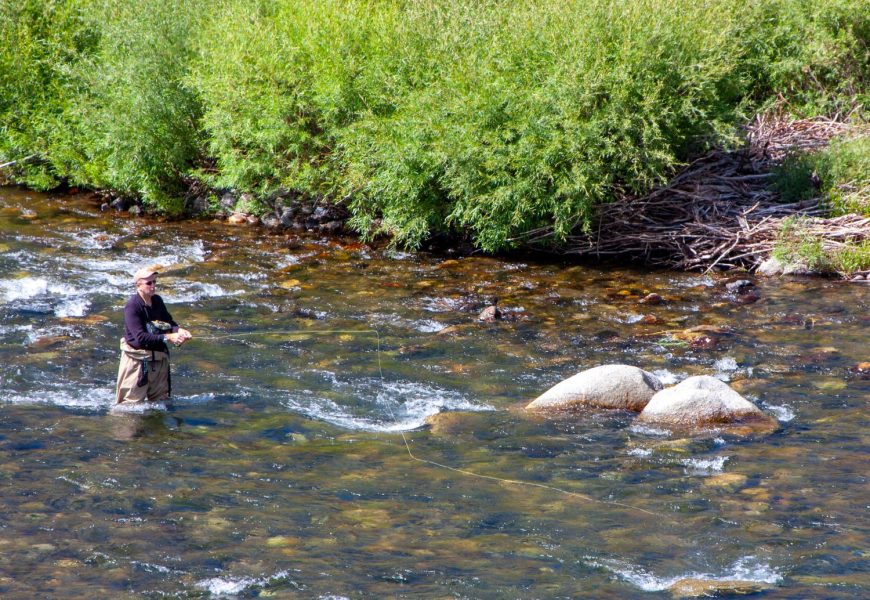
Dry fly success comes down to fishing where trout are actively feeding. Focus on soft seams, the inside edges of riffles, foam lines and the heads of pools where insects funnel through. In summer, bank water – the eighteen inches against the grass – produces some of the year’s biggest fish on hopper/dropper rigs. In tailwaters like the Green or the Bighorn, look for slick glides and weed-bed edges where selective trout sip emerging mayflies in slow rhythm. The same trout that ignores a perfect cast in fast water will eat a drag-free drift on the soft side.
Gear and Tactics That Make a Difference
A 9-foot 5-weight is the all-purpose Rocky Mountain dry fly rod. Step up to a 6-weight for hopper season or wind, and down to a 3- or 4-weight for technical tailwaters and small streams. Use 9- to 12-foot leaders tapered to 4X for stoneflies, 5X for caddis and most mayflies and 6X (or even 7X) for Tricos and selective tailwater fish. Mend before the fly lands, watch for the soft refusal and always rest a riser before re-casting.
Conservation: Protecting These Waters
The fishery you enjoy today exists because of decades of habitat work, water rights advocacy and angler-funded conservation. Warming rivers, drought and development are real threats. American Fly Fishing’s Conservation archive regularly covers the organizations and individuals doing the work – and how readers can help. Practice clean wading, follow hoot-owl restrictions when temperatures rise and consider supporting groups like Trout Unlimited, the Western Rivers Conservancy and your state’s wildlife agency.
Plan Your Next Rocky Mountain Trip
Rocky Mountain dry fly fishing is best learned where it lives – on the water, with current information about hatches, conditions and access. American Fly Fishing’s print magazine delivers in-depth destination features, fly patterns and conservation reporting in every issue. Request a free no-obligation issue or subscribe today to keep the inspiration coming all year.